For generations, the Sheehan Park aquatic center has been a beloved summer destination for Sun…
Commercial Kitchen Ventilation Design & DOAS Systems
In the foreground, a commercial kitchen is all about the food: chopping, searing, baking, and roasting. In the background, you notice the equipment, the layout, and the workflow. But behind the scenes, mechanical engineering can make or break how the kitchen performs. From ventilation and pressure balance to comfort and indoor air quality, these systems help support safe, efficient day-to-day operations.
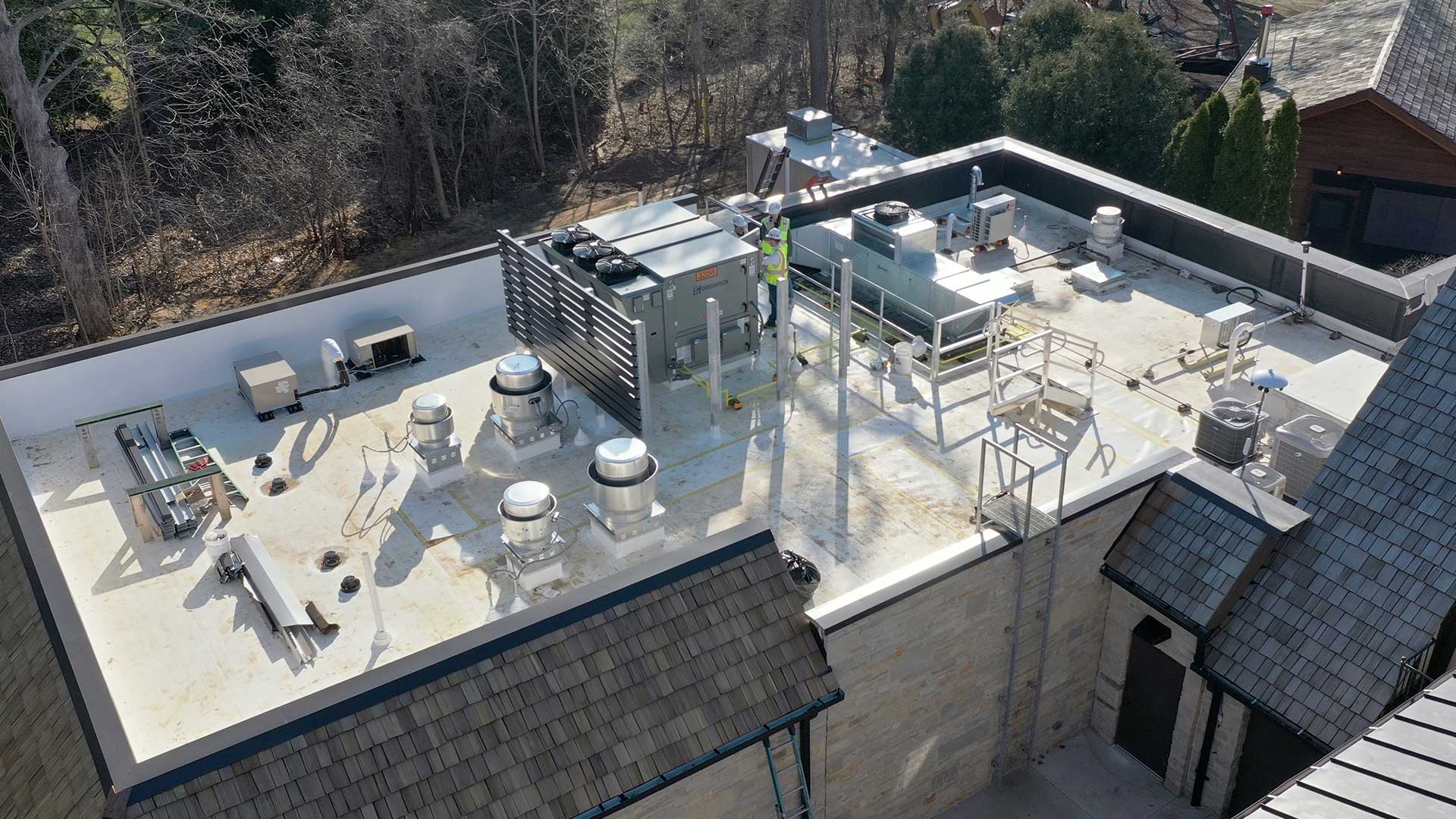
In this video, one of Iconica’s mechanical engineers explains how the Dedicated Outdoor Air System (DOAS) improves working conditions in the kitchen at Bishops Bay Country Club.
The Role of Mechanical Engineering in Commercial Kitchen Design
In a production kitchen, ventilation is not just about moving air. It is a carefully balanced system designed to manage:
- Heat generated by cooking equipment
- Grease-laden exhaust air
- Odor control between kitchen and dining spaces
- Continuous replacement of exhausted air
- Staff comfort during peak production hours
When exhaust hoods remove large volumes of air from the kitchen, that air must be replaced in a controlled and intentional way. Without proper design, the result can be negative pressure, uncomfortable working conditions, and reduced system efficiency.
How DOAS Improves Kitchen Performance
At Bishops Bay Country Club, Iconica’s engineers incorporated a Dedicated Outdoor Air System (DOAS) to help regulate ventilation and improve overall kitchen performance.
A DOAS unit delivers conditioned outdoor air in a controlled way to balance exhaust systems. This helps:
- Maintain proper building pressure
- Improve indoor air quality
- Stabilize kitchen temperatures
- Reduce strain on exhaust and HVAC systems
- Create a more comfortable working environment
Why Ventilation Design Matters in a Commercial Kitchen
Mechanical design has a direct impact on how a commercial kitchen functions. It affects:
- Indoor air quality
- Kitchen comfort for staff
- Building pressure and airflow balance
- Temperature control
- Overall system efficiency
When these systems are coordinated early, the result is a space that not only meets code and performance requirements but also works better for the people using it every day.
How Iconica’s Engineering Team Supports Commercial Kitchen Design
Commercial kitchen performance depends on more than just equipment selection. It requires coordination among mechanical, electrical, plumbing, and structural engineers, as well as architects and the chef.
Iconica’s in-house engineering team collaborates closely with owners, architects, and construction teams from the outset. By aligning ventilation needs, occupant comfort, system performance, and the owner’s budget early, they help streamline the design process, minimize field conflicts, and ensure optimal long-term performance once the kitchen is operational.

Related Posts